
Our Impact
Catalyst California...Change rooted in truth, partnered with community, fueled by justice.
Dive deeper into how we dismantle racial injustice and redesign systems for access and equity!
2025 Impact Report
In light of the significant challenges our country and communities faced in 2025 and continue to confront, we are not releasing a full annual report this year. Instead, we invite you to explore our timeline of accomplishments and our 25th anniversary page to learn more about our work and impact in 2025.
2024 Impact Report
2024 was a year of transition—the ground was shifting under our collective feet, and as we emerge fully from the pandemic, the extent of these disruptions is coming into sharp focus.
This annual impact report is a great summary of our work in 2024. Our work is made possible because of the trust you put in us. We’re committed to earning that trust well into the future.
2023 Impact Report
Our progressive racial justice movement has worked for decades to undo and repair harms from long ago. We are reversing public policies that have ignored the day-to-day conditions of Californians, particularly Californians of color. And we are dismantling systems that were designed to benefit the powerful and hold back everyone else.
2022 Impact Report
We leveraged all that we learned and built in our nearly 25 years as Advancement Project California to initiate a new chapter as an independent organization.
A timeline of our victories

RACE COUNTS created profiles with a snapshot of racial equity in every district of the California State Assembly and State Senate. Drawing on existing RACE COUNTS data, the profiles highlight how each district compares to the average for racial disparity and overall outcomes across seven RACE COUNTS issue areas. There is also a description of the five worst indicators for disparity and outcomes, as well as the racial/ethnic group most affected by racial disparities in the district.

With ballots mailed, drop boxes open, and voting begun, We Are California conducted Can’t Stop California, an election protection and awareness campaign aimed at combatting disinformation during the November 4 special election, ensuring that Californians could vote freely, safely and proudly. Activities, celebrations, rallies and remembrances across the region in the days leading up to the election reminded Californians that every voice counts in our multiracial democracy!

Passage of Donald Trump’s budget, H.R. 1, marks the culmination of efforts by the far right and its corporate allies to weaken our multiracial working-class democracy by dismantling its safety net. Cuts to Medicaid and SNAP shift health care and food aid costs, and new administrative requirements, to counties. Cities will also feel the strain of a sicker and hungrier population. Meanwhile, the top 1% gets an average tax cut of $64,700, while the bottom 20% get just $90, according to the Center on Budget and Policy Priorities. Our report, The Looming Crisis, helps movement organizations and policymakers prepare to mitigate its worst impacts.

Catalyst California and the Social Justice Learning Institute released Brighter Futures: The Bold Vision Youth Thriving Survey, the first of its kind to center the voices of BIPOC young people in Los Angeles. The survey included responses from more than 3,000 young people ages 15-24 in Los Angeles County. It provides a new understanding of what makes youth thrive, so policy makers can craft truly equitable policies grounded in data and youth voices.

Catalyst California and the Alliance for Reparations, Reconciliation & Truth teamed up to present The 14th Amendment Under Fire: A Black August Conversation, a livestreamed event led by Dr. John Dobard on why the 14th Amendment matters more than ever in this moment and why this administration is trying to cancel it. We heard about its history from Dr. Cheryl Grills of Loyola-Marymount University, its current legal challenges from Lisa Holder of the Equal Justice Society, attacks on due process and birthright citizenship from Angélica Salas of CHIRLA, and its relation to reparations from Kevin Cosney of the California Black Power Network. A conversation for our times.

The Equity Alliance for LA’s Kids hosted a convening for students and families to drum up support for the Student Equity Needs Index (SENI), a tool that over time has brought more equitable funding to help high-needs schools in the Los Angeles Unified School District. The aim was to prepare the community for the 2025-26 budget advocacy season, to ensure SENI remained funded and protected.

Southwest Asian/North African (SWANA) communities face a Catch-22 of invisibility in California. Though they experience the world as people of color, governments often classify them as White, whic leaves them out of conversations among communities of color that share their concerns. A new RACE COUNTS report, Toward Identity and Visibility: 1 Million SWANA Californians Strong, spotlighted the lives of SWANA people in California to end that invisibility.

Catalyst California helped organize the Hey Billionaires: Hands Off Our Healthcare! statewide caravan, a series of rolling actions across the state to show how Californians resist the corporate takeover of our government and the gutting of our health care by billionaire allies of the Trump administration, like Elon Musk. We showed we’re not letting billionaires steal our healthcare and get richer off our backs, and we are mobilizing to stop this money grab.

After the devastation of the Los Angeles wildfires, particularly the Eaton fire that razed so much of Altadena, Catalyst California quickly swung into action to help convene allies, service organizations and mutual aid partners to craft a collective response to help survivors and hold government accountable for an equitable, lasting response. Among the efforts that arose out of that meeting is Dena Rise UP, a grass roots coalition that we are proud to support.

Which highlights the destructive inequities that keep youth from living up to their full potential and offers a roadmap for the social justice movement to focus on programs that benefit youth. The data found in the report can stir Los Angeles’ policymakers to action and help them create a better future. Learn more

The equity index is a geographic quantitative tool that estimates areas especially impacted by systemic racial disparities. Its goal is to promote positive outcomes and opportunities so that communities of color can thrive. This tool aims to address blindspots in previous indices, offering a promising step forward.

We understand the threats so many of our communities face from the current administration. But Catalyst California and its partners have a plan to build a more powerful, collective pushback against the billionaires, bigots, and bullies working to derail our state’s progress. We Are California unites communities from San Diego to Scotia, from the Bay to LA and from the coasts to the inland regions to defend our communities and advance a vision of California where everyone thrives. Because California works best when it works for us all.

Secured victory for Measures DD and LL on the November 2024 ballot, giving important decision-making power to community members across Los Angeles and taking that power out of the hands of politicians. These measures enable changes to the City Charter, establishing Independent Redistricting Commissions in the City of LA and LAUSD. It allows community residents to draw boundaries based on input from the public during the redistricting process that happens every 10 years. OUR LA—a coalition of community-based organizations and racial justice advocates formed in response to the 2022 LA City Council audio tapes scandal—played a pivotal role in the passage of these measures.

Data play a vital role in all kinds of decision-making, from where we eat lunch to how much funding our school district receives. Data analysts and users must root our work in the most authentic stories represented by data. Paying close attention to the limitations of race data is crucial. When we at Catalyst California visualize data by race, we aim to highlight the impact of systemic racism and increase visibility for the most underrepresented groups. In our Data Storytelling Guide, we outlined how we center community stories within data and discuss how thoughtful design makes those stories more effective.

As they waited to see whether several bills and a constitutional amendment related to slavery reparations became state law, Californians got a sense of what a key voter group thinks of the issue in the report Building Brighter Futures: Interests and Priorities of Black Californians. A largest-of-its-kind survey conducted by the California Black Power Network, L. Norwood & Associates, and Catalyst California, the report showed reparations, as a political issue, drive voting decisions among Black residents. The survey polled nearly 1,300 voters on their opinions, priorities and voting motivations regarding reparations.

To celebrate 10 years of the Student Equity Need Index, we helped release the policy platform for the Equity Alliance for LA’s Kids. Developed through extensive input from two youth and parent convenings, a partner convening, and student surveys, the policy platform embodies our vision for the education we want to see in the Los Angeles Unified School District (LAUSD).

As members of the PUSH LA Coalition, we successfully organized and advocated for the Los Angeles City Council to pass a motion directing local agencies to study implementing policies to end racially biased traffic stops, limit traffic tickets and fines, make streets safer, and replace armed officers with an unarmed care professionals in traffic situations.

Catalyst California and its partners worked to convince the Los Angeles Unified School District Board of Education to unanimously approve a resolution to create a public budget tool that connects school district investments to student outcomes. The resolution specified ongoing training and support to help community members prepare for the 2025-26 budget cycle.

Catalyst California, the California Budget & Policy Center, and the Million Voters Project launched the Budget Power Project to foster local communities' active participation in state and local budget processes. It provides trainings, narrative sessions, coaching, and research to supports 23 local grassroots organizations' work to power California’s communities of color to push for policies that address their most pressing needs. Through collaboration, education, and advocacy, the partners empower Californians who have long been denied acess to more actively participate in shaping the future of their communities.

Catalyst California and Pillars of the Community released End Gang Profiling in Southeast San Diego: Data and Stories from Community Members. At the heart of this digital interactive report lies an in-depth analysis of the San Diego Police Department’s (SDPD) patrol activities through stop data and video interviews with community members from Southeast San Diego. The data and stories reveal a harrowing portrait of injustice: SDPD practice is to criminalize Black and Latinx residents in Southeast San Diego by profiling them as gang members. This inflicts physical, mental, and emotional trauma on community members, undermines safety, and annually wastes millions of public dollars.

California’s Racial and Identity Profiling Advisory (RIPA) Board, created in 2016, released its seventh annual report spotlighting systemic racial bias in police patrols throughout California. The report examines more ways to improve law enforcement/community interactions and reduce racial and identity profiling. The report's wealth of detail helps community members evaluate police treatment in their local areas and keep municipal and county governments accountable to treat everyone fairly.

Following the landmark 2022 release of “Reimagining Community Safety in California”, Catalyst California’s Reimagine Justice & Safety program partnered with the ACLU to reveal how sheriff’s departments in Sacramento County engage in racially biased patrol activities that inflict devastating harm on communities of color, undermine community safety and waste tremendous public dollars.
Learn more about Sacramento, Riverside, and Los Angeles County

Launched RACE COUNTS 2.0, a revamped version of the RACE COUNTS tool that provides community-based organizations, advocates, elected officials, media, and philanthropy with data and analysis on racial disparity and outcomes across the state. In addition to providing racial disparity data for over 40 indicators, the updated RACE COUNTS tool now includes stories of organizations and partners that have used RACE COUNTS data to advance racial equity. It also has a Take Action center where users can learn how to partner with RACE COUNTS and what they can do to address disparities highlighted by ourdata.
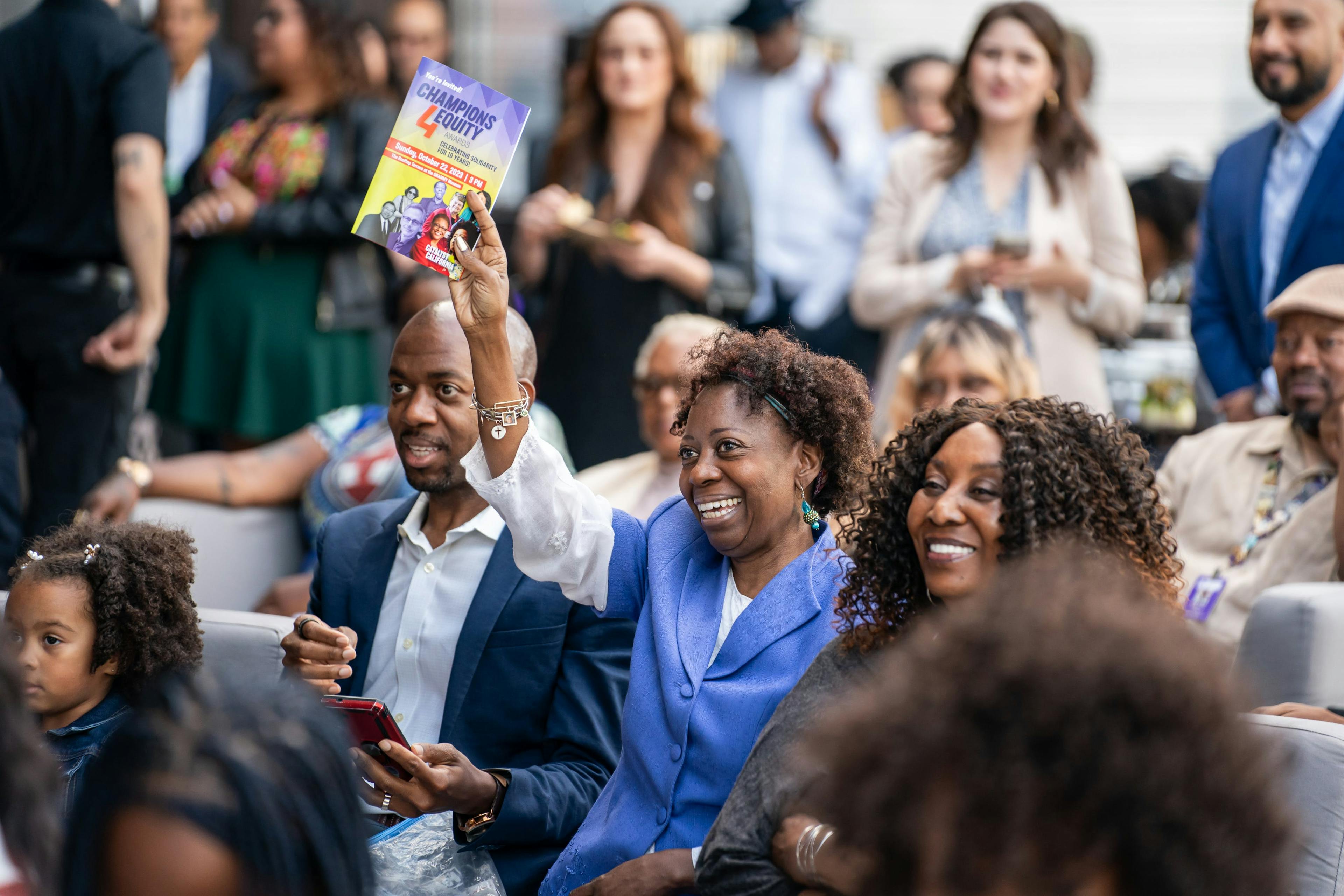
Ten years ago, we set out to create a different kind of fundraising event that reflected the best of Los Angeles and California with an event that brought folks together across geographies, generations, and ethnic, racial, and economic backgrounds. This year’s event welcomed over 250 guests to celebrate the remarkable people we have recognized and featured over the years and honor three incredible leaders for their commitment to racial equity and improving the lives of all Californians: Holly J. Mitchell, Max Arias, and Pete White.

We all want to live in safe communities, and we spend tremendous public dollars on law enforcement to achieve this objective. This approach operates on the assumption that investing in law enforcement efficiently ensures safety. However, data on police activity suggests otherwise. During their community patrols, police often spend the majority of their time stopping people for minor vehicle equipment and administrative issues, such as a broken taillight, an object hanging from a rearview mirror, or outdated registration.
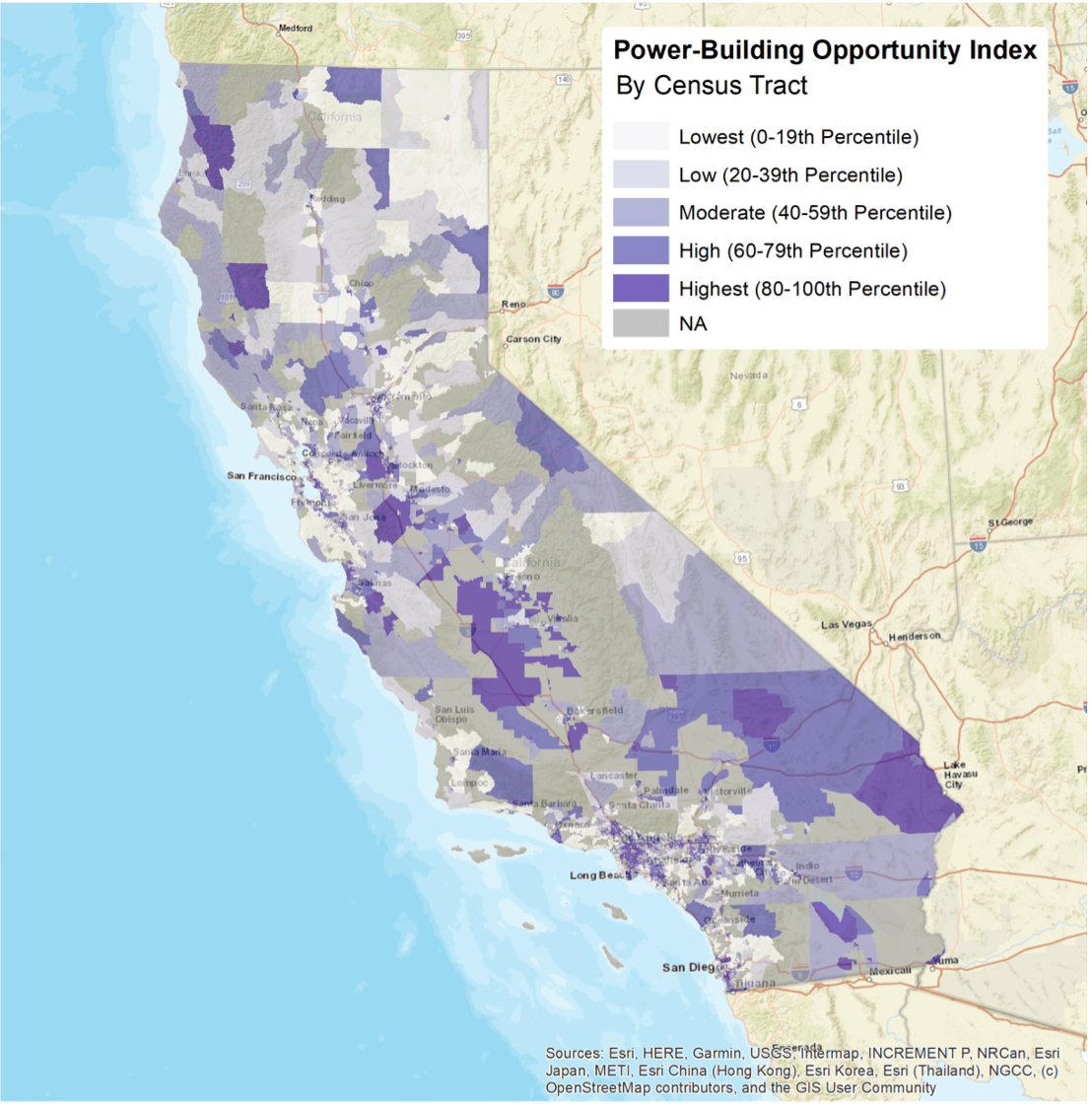
The Power-Building Opportunity Index is the result of collaboration between Catalyst California and the Integrated Voter Engagement Redistricting Alliance and the People’s Bloc, two coalitions of community-based organizations at the state and Los Angeles County levels. The index is a composite of data-driven indicators selected by our coalition partners, including demographic, community, and power-building data.
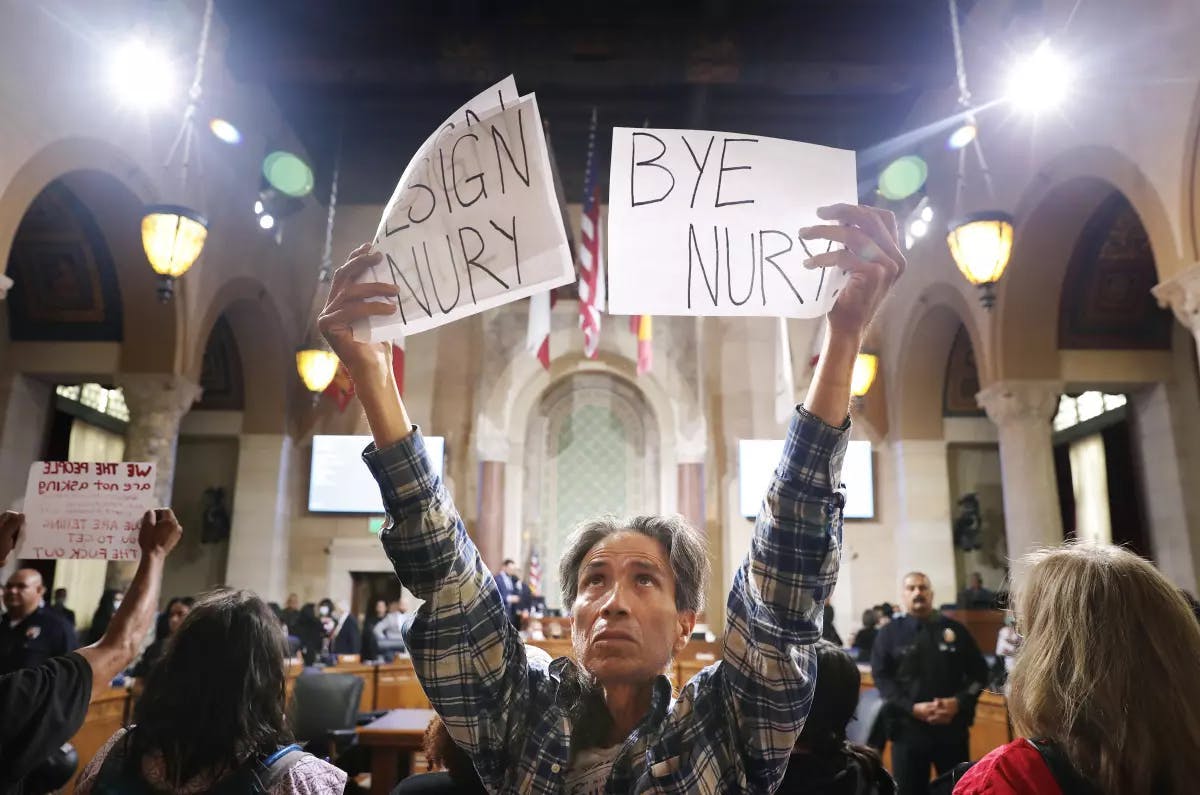
A year ago Los Angeles City Hall was rocked by scandal. A secret audio recording captured three council members making deplorable and racially divisive comments about their colleagues and constituents as they plotted for political power.

Using data from the 2019 RIPA annual report, Catalyst California and the ACLU of Southern California released Reimagining Community Safety: Los Angeles County and Reimagining Community Safety: Riverside County, which showed how sheriff’s deputies today use minor vehicle equipment and administrative infractions to profile, harass, and impoverish communities of color. Known as pretextual stops, these repackaged versions of old-time vagrancy laws and Black codes, aim to preserve Jim Crow maintaining racial and economic oppression under the guise of safety.

Thousands of providers and advocates led by the Child Care Providers Union (CCPU) reached a historic, $1 billion two-year contract agreement with the State of California. It established a path to a pay system that addresses the true cost of care and secures benefits for providers, including an $80 million retirement fund and $100 million for health care.

The Los Angeles City Council leaked audio scandal caused significant harm across communities and highlighted disparities in how our government operates. Our city's challenges are more profound than the three council members captured on tape, as the laws that govern their actions have created a system in which prejudice and personal advancement can be prioritized over the public good.
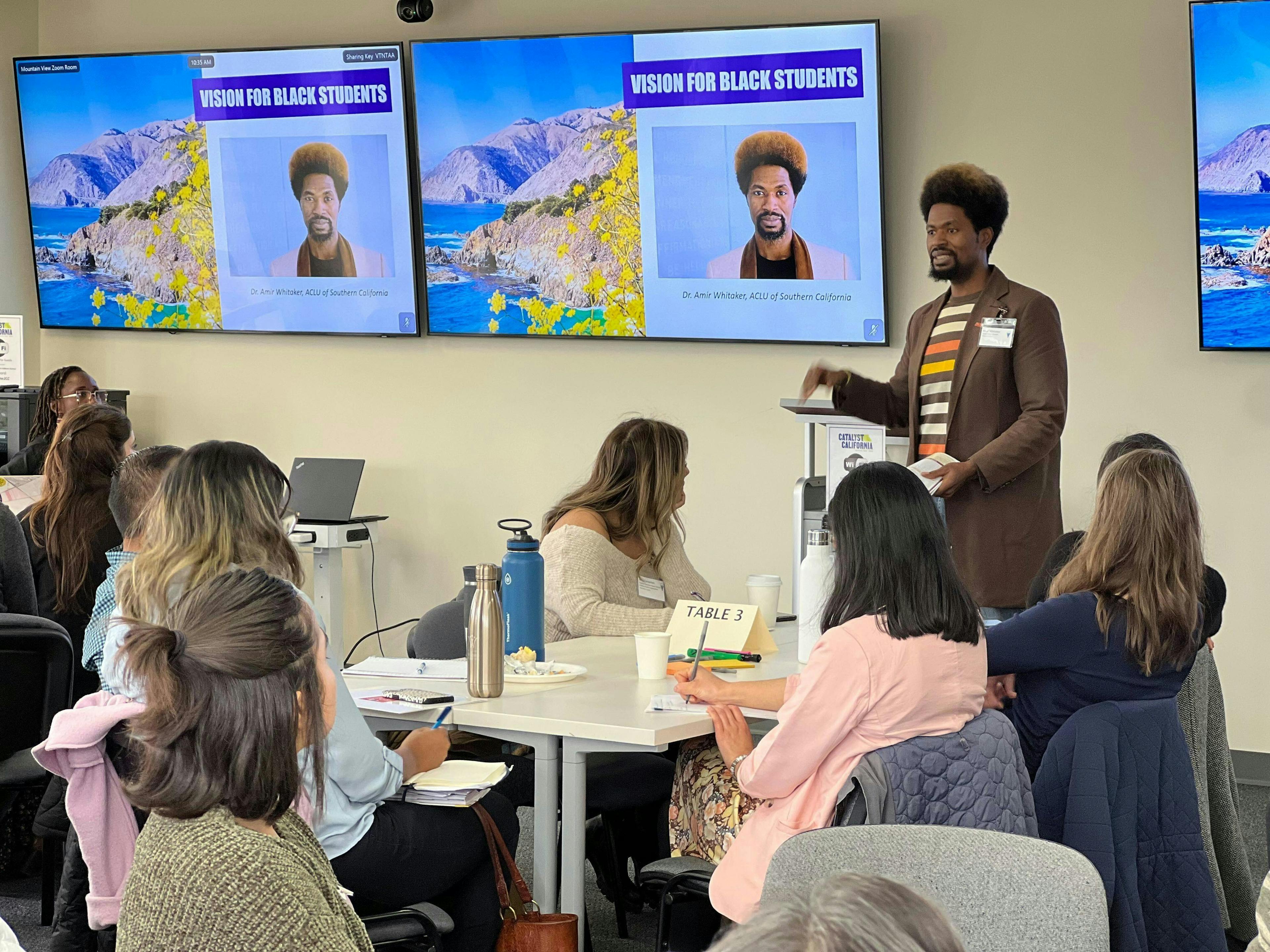
This Spring, our Educational Equity team convened a Water Cooler Conference “table talk” focused on the Local Control Funding Formula (LCFF) policy, which helps deliver resources to high-need schools. In honor of the event, our Educational Equity team launched a three-part blog series sharing key themes and takeaways from the conversation.
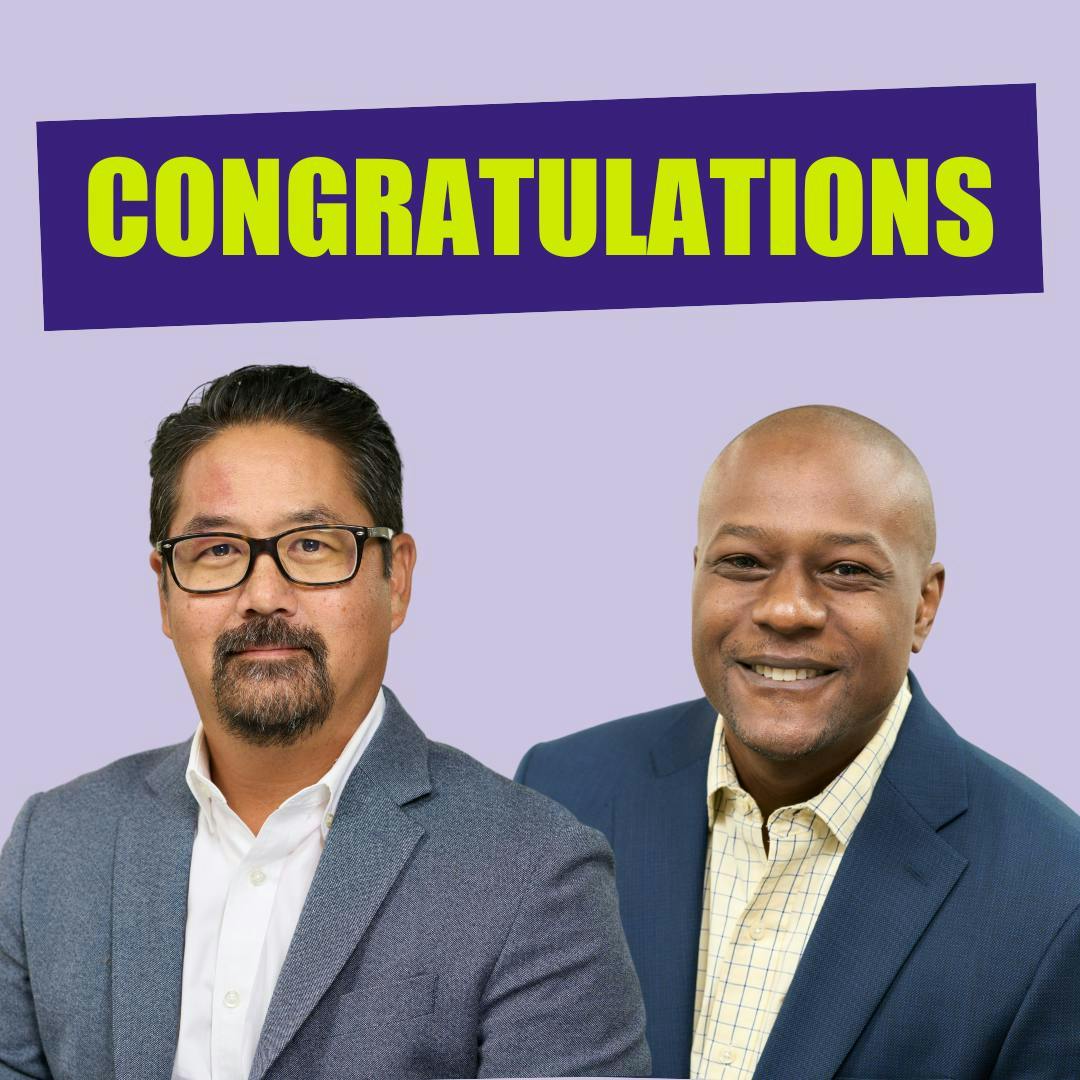
Our President and CEO, John Kim, joins the California Racial Equity Commission, while Vice President of Policy and Programs Dr. John Dobard is joining the Racial and Identity Profiling Advisory (RIPA) Board. The appointments come at a crucial time as California reckons with racial disparities exacerbated in the wake of the lingering COVID-19 pandemic and racial uprisings.

Last year, our Government Relations Team was able to secure a number of monumental victories in the fight for racial and economic justice. In September, Governor Newsom signedan executive order establishing a Racial Equity Commission. The following month, the Governor signed into law our sponsored bill,AB 2832 (Rivas, R) - Whole Child Community Equity, which provides a powerful tool for reducing racial and economic disparities for historically underserved communities.
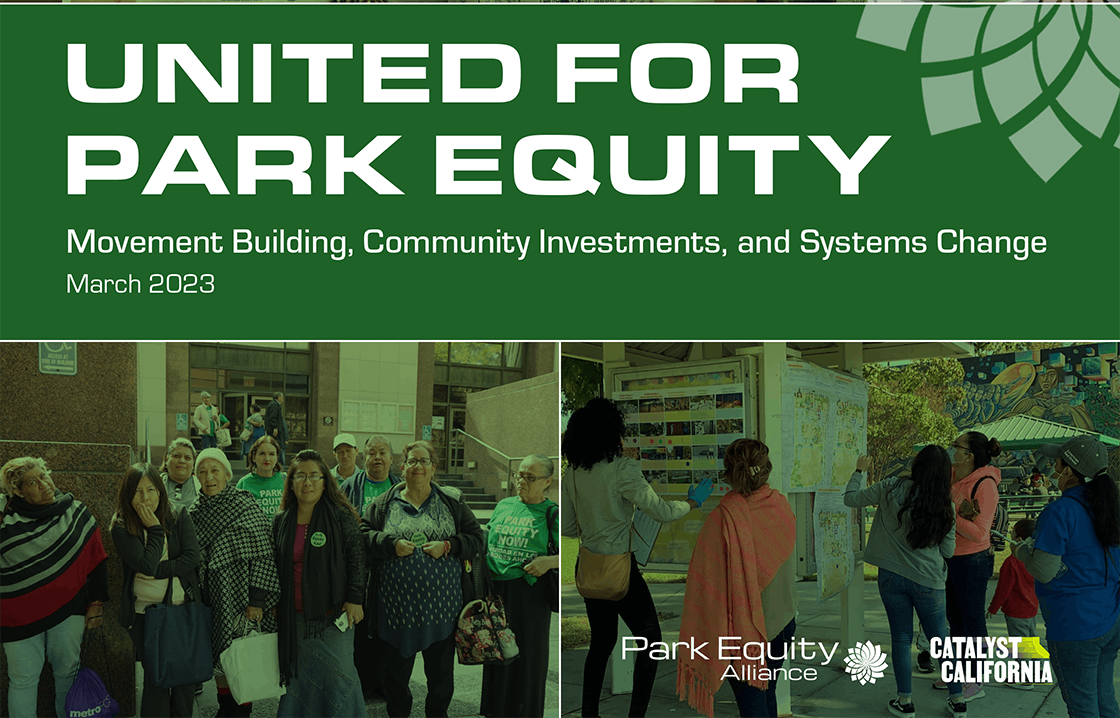
The Park Equity Alliance has contributed to significant victories that have made Los Angeles County’s park system stronger and more equitable. After initially forming to advocate in the Measure A implementation process, the Alliance’s diverse membership has contributed to concrete improvements in Measure A’s equitable funding distribution methodology, the inclusion of technical assistance grants and multi-benefit projects, and the sustenance of inclusive community engagement throughout the project development process.

As part of the Equity Alliance for LA’s Kids, we demanded and won permanent investments into the Student Equity Needs Index (SENI) to protect the stability of $700 million annual SENI investments. This was critical to ensuring that the Los Angeles Unified School District (LAUSD) continues to fund SENI so that the district remainsequity centered.

Since the passage of Proposition 64 in 2016, California state and local governments have collected millions in new revenue from the sale and cultivation of recreational cannabis. This report sheds light on how local governments in Los Angeles County are collecting and spending local cannabis tax revenues.
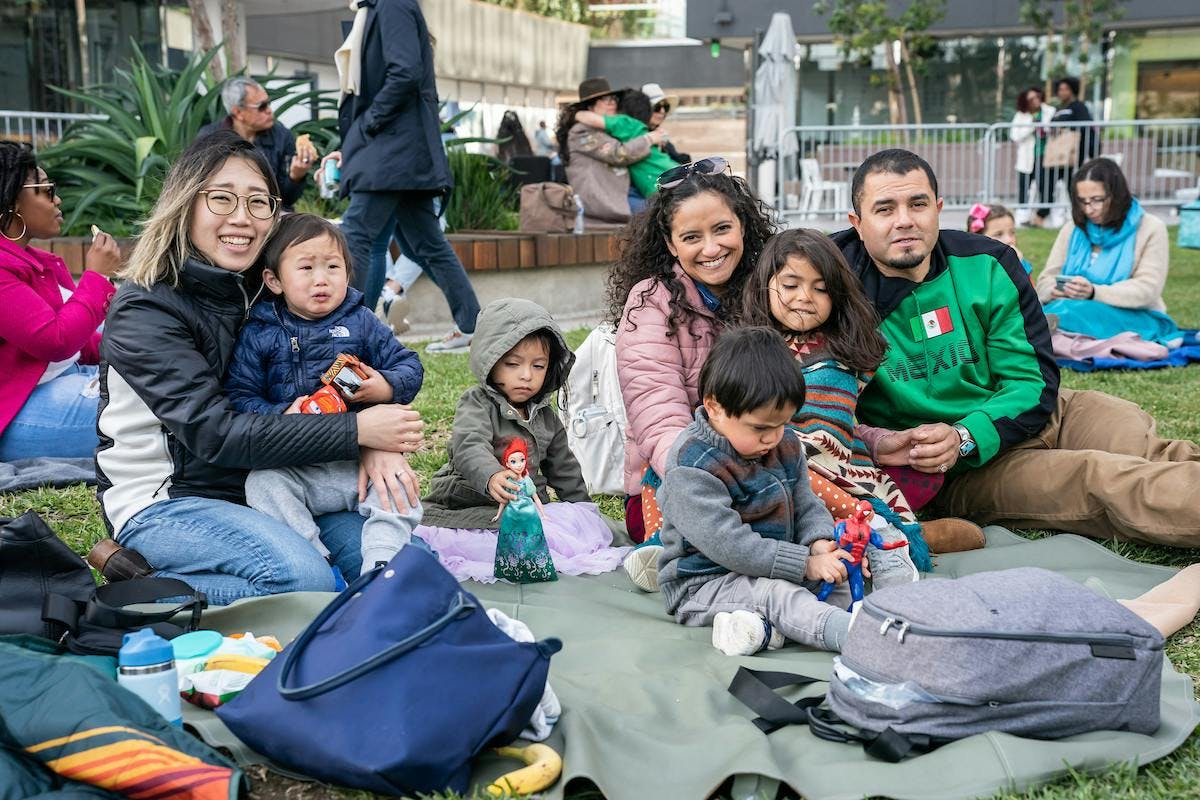
California has been a model of multiracial organizing and advocacy for generations – yet the intersectional bonds that were built during the 1960s Farmworkers’ Movement, 1970s Civil Rights Movement, and Los Angeles Uprising in ’92 have frayed over recent decades. On Sunday, March 26, Catalyst California teamed up with Grand Performances to host State of the State: Solidarity in Action– a free community program that served to refresh our commitment to, and understanding of, a resilient cross-racial solidarity that celebrates our differences and clarifies why and how we build power.

This powerful new report elevates the voices of families with young children, particularly those from historically underserved communities of color across the state. The report was informed and guided by core partners, Abriendo Puertas/Opening Doors and California Child Care Resource and Referral Network, and offers insights from families to inform California’s decisions on rate reform and quality that can eradicate systemic barriers rooted in racism, sexism, and classism, and ensure the system is fully resourced and designed for California’s diverse children to thrive.
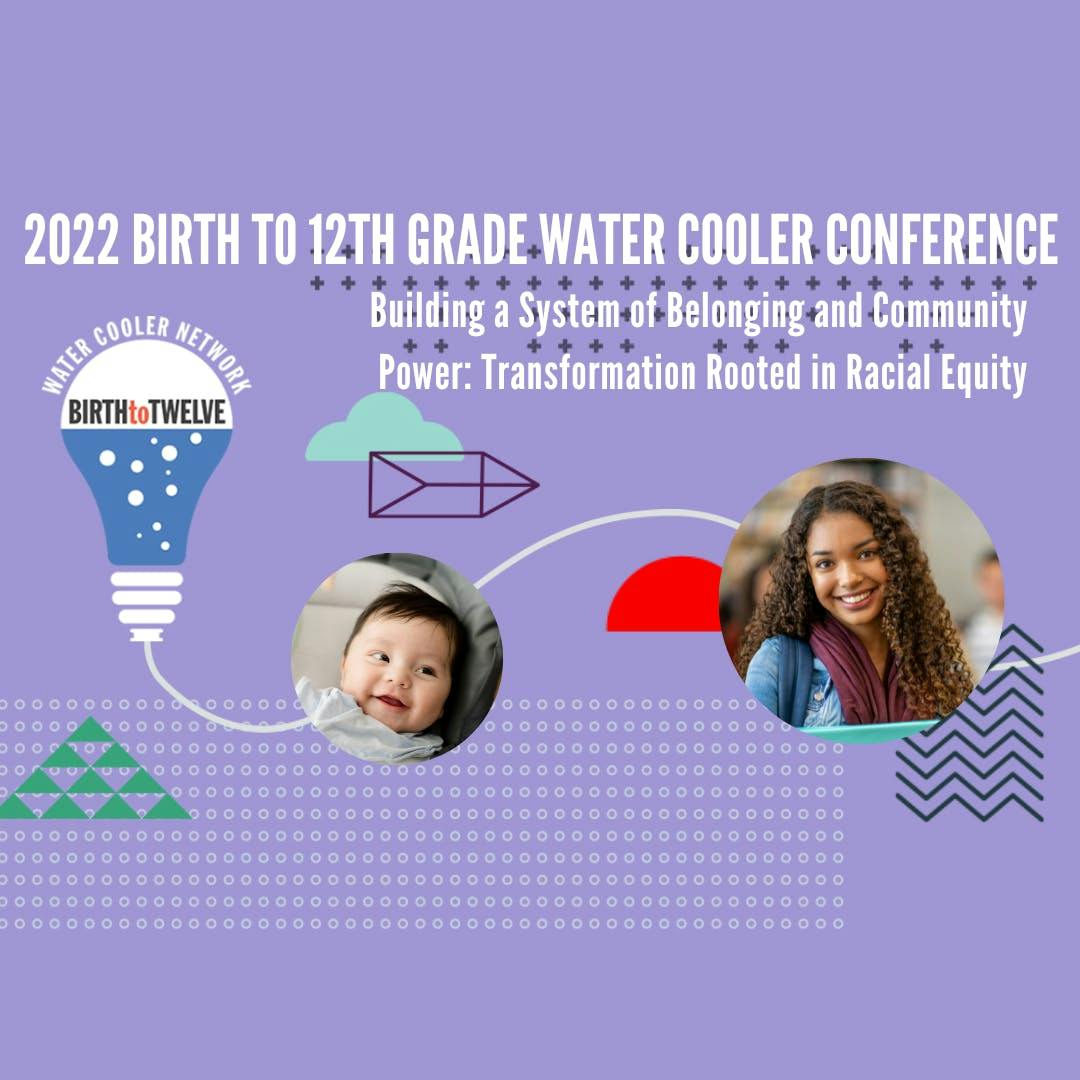
On November 1st and 2nd we had our two-day, virtual Birth to 12th Grade Water Cooler Conference – Building a System of Belonging and Community Power: Transformation Rooted in Racial Equity!
This action-packed conference brought together many dedicated early childhood and K-12 stakeholders from across California. Together, we explored how we center equity and community voice in policy and budget investments that result in a transformative and racially just birth to 12th-grade system for California’s children and families.
California’s prosperity has long masked racial inequities across nearly every measure of well-being. The direct causes of these inequities are complex and the collective results of centuries of systemic racism.
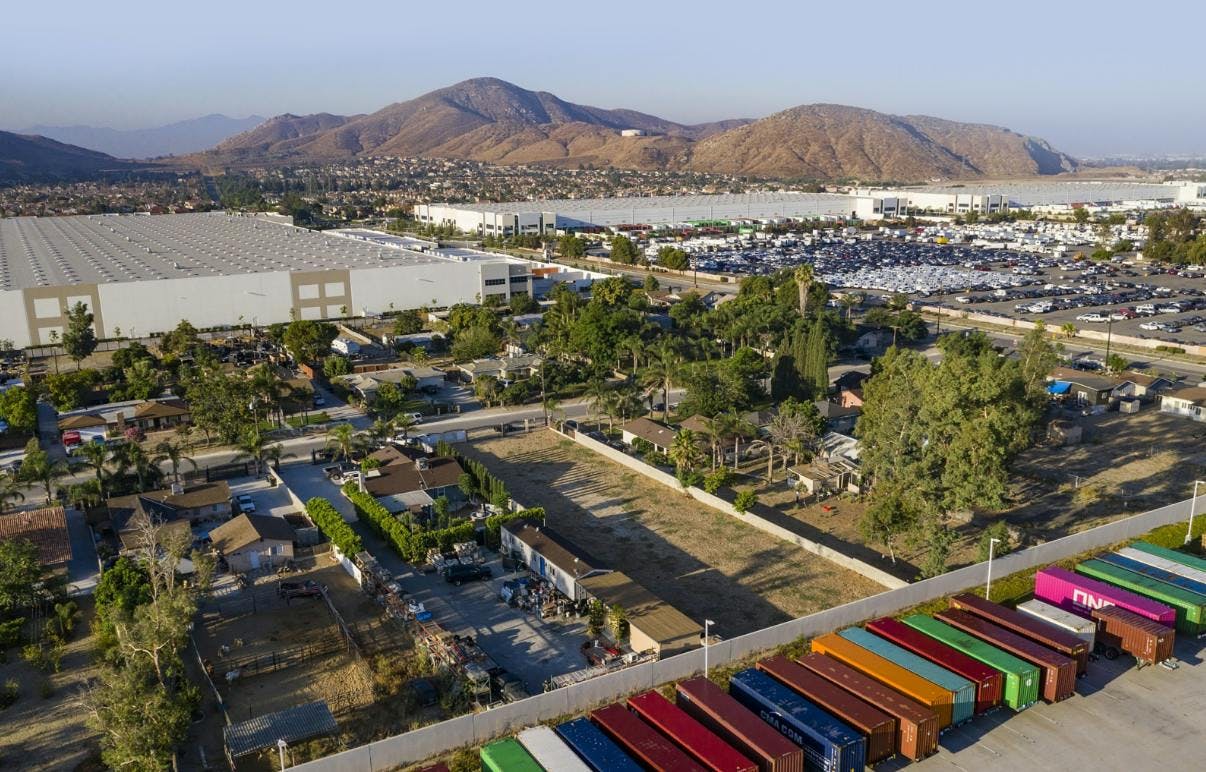
Black, Indigenous, and people of color (BIPOC) communities are facing compounded and enduring health challenges due to COVID-19 and climate-related impacts. There is a huge need to significantly fund organizing, education, and awareness of climate inequities geared toward BIPOC community members. This brief provides key insights for community leaders, policy advocates, state and local policymakers, funders, and other stakeholders to better understand the distinct needs of BIPOC communities in the San Joaquin Valley and Inland Empire.

Among the raft of equity bills that Governor Newsom signed into law, AB 2832, also known as the Whole Child Equity bill, stands out in its bold approach to impact how our state allocates early care and education resources based on equity. The bill, sponsored by Catalyst California and championed in the legislature by Assemblymember Robert Rivas, provides a powerful tool for reducing racial and economic disparities for historically underserved communities of color across California.

On Sunday, October 16, Catalyst California (formerly Advancement Project California) hosted our Champions for Equity Awards at The Terrace at L.A. Live. The event was a tremendous success because of YOU– the dedicated and generous partners, donors, and supporters who make our transformative racial justice work possible. Read on for a recap of the unforgettable afternoon or scroll to the bottom of this page to watch the full recording!
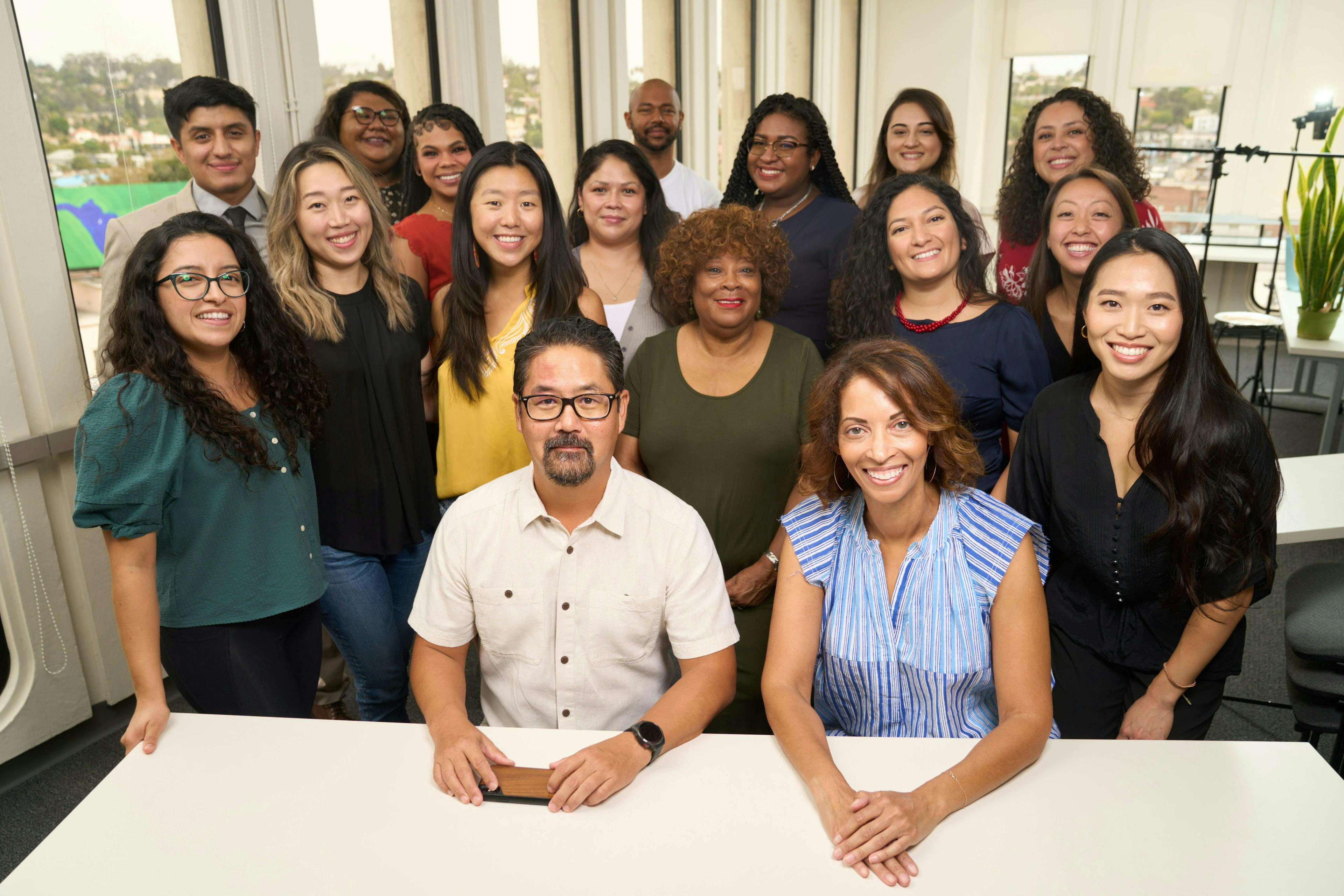
Advancement Project California became Catalyst California, marking a new chapter for the longtime racial justice organization and a renewed commitment to dismantling racial injustice and redesigning systems for access and equity.
For more than 20 years, the Advancement Project was comprised of two coequal branch offices – Advancement Project National Office and Advancement Project California – linked by a shared vision of a caring, inclusive, and just democracy. As an independent nonprofit organization, Catalyst California will continue to leverage its years of experience partnering with community groups and engaging with state and local policymakers to address pressing racial and economic equity issues facing communities of color in California. The National Office will retain the Advancement Project name and continue to be a national organization working on cutting-edge issues impacting people of color.

Catalyst California’s RACE COUNTS initiative launched its latest update that allows users to filter critical data by race. This new feature highlights the stark racial disparities that have harmed communities of color across California for decades and underscores the urgent need to transform public systems to create a more equitable California.

Our RACE COUNTS initiative released its data reload that shows the extraordinary harm inflicted on low-income communities of color during the COVID-19 pandemic was the product of racist policies and practices embedded within and across our public and private institutions. Leading up to the pandemic, low-income communities of color experienced deep inequities across three critical sectors—economic opportunity, housing, and health care—that all too often made upward mobility impractical and entrenched poverty a foregone conclusion

We hosted our Champions for Equity Awards: Power Pivot – a riveting virtual event that honored racial justice leaders, recognized the hardships and heroism of essential workers who have been carrying us through the pandemic, and celebrated our community’s collective power and perseverance. Thanks to YOUR support, the event raised nearly $200K in critical unrestricted funding to fuel our racial and economic justice initiatives.

We successfully campaigned alongside partners for the Los Angeles County Board of Supervisors to address the pandemic’s disparate impact on low-income communities and communities of color by passing a motion that will equitably distribute 75% of the county’s $1.9B in American Rescue Plan Act funding to the communities that need it most.

We empowered low-income Black, Indigenous, and people of color (BIPOC) Californians to participate in the 2021 state and local redistricting processes by convening the Integrated Voter Engagement Redistricting Alliance and co-convening the People's Bloc coalition in Los Angeles.

In collaboration with partners, we developed and released the first-ever Justice Equity Services Index (JESI), providing policymakers and advocates the ability to detect where there are greater or fewer vital services needed to support communities most impacted by our status-quo justice system.

We launched our Funding Racial Justice Budget Advocacy Training program – a series of five virtual hands-on sessions where participants deepened their knowledge of local budgets, learned to perform budget analyses, developed campaign messaging tools, and received one-on-one mentorship and coaching on how to lead an individual budget campaign project.

We ensured LAUSD's Highest Need schools received an additional $700 million for the 2021-22 academic school year under the "Equity is Justice 2021 Resolution” utilizing the Student Equity Need Index (SENI). SENI 2.0 helps measure academic and community indicators among student populations across the district to determine which schools are in greatest need of additional funding. Students in high-need neighborhoods will now have access to additional funds and resources which will help address the inequities COVID-19 amplified in 2020 and the overall barriers our Black and Latinx students face in LA County's public school system.

We released Reimagining Traffic Safety & Bold Political Leadership in Los Angeles – a bold new interactive report that shows how Los Angeles Police Department traffic stops and arrests are racially and economically biased and provides recommendations for enhancing traffic safety through alternative models that do not rely on armed law enforcement.

We presented State of the State: A Just Recovery – a live virtual event that brought together hundreds of advocates from across the state to explore with movement leaders why and how California must center racial equity as we strive to recover from the pandemic and other recent crises.

As part of the Park Equity Alliance, we helped restore over $17M in funding amidst pandemic-related budget cuts to support parks programs in LA County. This restored funding ensured programs like the award-winning Parks After Dark could continue and provided a lifeline to low-income communities of color across the county – especially those most heavily impacted by COVID-19.

We sourced data and created interactive maps to reveal high air pollutant concentrations in the Los Angeles-Long Beach Harbor and the adverse effects on residents – such as hospitalization and school absenteeism due to asthma. The maps provide our partners with the actionable data they need to demand environmental justice in the region, which has historically high rates of asthma.

We released our COVID-19: Statewide Vulnerability & Recovery Index, an interactive tool that provides policymakers and advocates with actionable data to chart a path to a more equitable post-pandemic future. The index has been used by state and local leaders to identify and direct funding and policy solutions to those most impacted by the pandemic and decades of systemic racism.

We developed our Early Care and Education blog series to document California’s early learning and care system amid COVID-19, telling the stories of home-based child care providers committed to caring for children despite the pandemic’s dangers. The series sheds light on what folks in this field – primarily women of color – are grappling with and the support they need

We worked alongside organizations across the state and country to ensure the 2020 Census accurately counted disenfranchised communities who were historically excluded from previous counts. Thanks to our collective efforts, California’s self-response rate surpassed its 2010 self-response rate despite all the traditional Census outreach strategies being upended by the pandemic.

We successfully advocated for the Los Angeles Unified School District to reduce funding for school police by $26M and redirect those funds to invest in resources for Black students. This is a critical first step to defunding school police and investing in Black futures.

We pushed the LA County Board of Supervisors to build up nearly $100M for the Alternatives to Policing Program and the Office of Diversion and Reentry in this year's Supplemental Budget - money that can be used to support system-impacted individuals and lay a framework for how to design systems that apply a care-first approach.

Through our advocacy, we stopped the permanent closure of school buildings, which would have reduced educational opportunities and services for students in COVID-impacted neighborhoods.

We helped defeat statewide budget cuts to child care programs offering essential care to families through family child care homes and child care centers in the following programs: Alternative Payment Program, General Child Care, and the California State Preschool Program.

We launched WeBudget, our groundbreaking data platform to help parents, students, caregivers, and advocates better push for equity in the Los Angeles Unified School District budget.

We advocated for: distributing $2.9B in federal CARES Act dollars using the Local Control Funding Formula; requiring social emotional wellness and robust engagement of students and families in return-to-school plans; investing $45M for community schools and collaborating with service providers, educators, students, and families; and identifying alternatives to school police and resource officers.

We pushed the LA City Council and County Supervisors to enact over 20 crucial protections for communities most affected by COVID-19, including foreclosure prevention and mortgage relief, temporary housing for over 5,000 people experiencing homelessness, and guaranteed paid sick leave for more than 440,000 workers.

We became a member of PUSH LA, a coalition formed in response to decades of racist policing that has plagued Black and Brown communities in Los Angeles. Launched after data analyses in the Los Angeles Times revealed that the LAPD Metro Division officers stopped and arrested Black people at a rate more than five times their share of the city’s population, we were able to successfully get the department to change its policy and drastically cut back on random stops.

Imagine how much brighter the future looks when cities decide to invest meaningful time and resources towards youth development. That’s what members of the Invest in Youth Coalition did when they successfully advocated for the City of Los Angeles to establish an executive task force to develop a comprehensive citywide youth development strategy. As a founding member of the coalition, Advancement Project California conducted a geographic analysis of LA’s highest need youth and identified opportunities for the city government to fill gaps in services. Our Beloved California is one where the important responsibilities of youth development are a top priority.
Imagine healthy, sustainable communities where people of color have access to parks. With our partners, we brought over 300 residents to an LA County Board of Supervisors meeting to successfully advocate for park equity guidelines that will create more parks in communities that have borne the brunt of past disinvestment. Our Beloved California takes real steps to create vibrant, green communities, especially for children and older residents in park-poor areas.

Imagine the 2020 Census being more than just a count, but also an opportunity for community-based organizations to help residents lead policy change in their own neighborhoods. That’s at the core of what the Los Angeles Regional Census Table is doing. In partnership with organizations like Long Beach Forward and LA Voice, we created a space for collaboration and leadership development not just to ensure a fair, accurate 2020 Census count, but to fortify the connections that make power building possible. Our Beloved California is one where residents feel energized to strengthen our democracy across the local, state and national levels.

Imagine public schools that help students become fluent and literate in multiple languages. In partnership with organizations like Educare, we helped develop and launch dual language programs in early childhood settings in two of the largest districts in California – Los Angeles and Long Beach. Our Beloved California knows bilingualism is one of the richest assets in our State.

Imagine community organizers and government officials understanding how racial inequality affects their local communities. We created RACECOUNTS.org to give organizers and equity advocates across the State access to public data revealing how race affects life outcomes. In 2018, we added new data for over 100 of California's largest cities and 300 school districts to our online tool. Our Beloved California tackles the legacy of racial inequality in our public systems with rigorous research and analysis.

Imagine every baby and toddler in Los Angeles having access to high-quality early learning opportunities. We need bold solutions to realize this vision. That’s why we worked with the Los Angeles County Board of Supervisors to unanimously pass a motion to assess County-owned properties available to be used for future early care and education services. Our Beloved California gives our youngest learners a fair shot at success in life.

Imagine safe haven schools that find real solutions to combat a climate of fear and hate. We and our partners created the Welcoming & Safe Schools for All Model Resolution, which protects the rights of immigrant students, students of color, students of faith, and LGBTQ students. Our Beloved California is one where schools take proactive steps to create safe, supportive learning environments for all students.

Imagine fully-resourced schools that fairly compensate educators and provide our kids with a quality education. We believe breaking down barriers between education systems is the key to achieving that vision. That is why we created the Birth to Twelfth Grade Water Cooler Conference, a first-of-its-kind event uniting over 250 of California’s top policy leaders and practitioners from all across the educational landscape. Our Beloved California is one where collaboration creates the path to success.

Imagine young people being excited to help set priorities for a city budget. Our partnership with community-based organizations on the Invest in Youth Long Beach campaign led the City of Long Beach to begin developing a strategic plan to support youth development programs. Our Beloved California harnesses the power of young people and meaningfully involves them in budget decisions.

Imagine residents going door-to-door to ensure their neighbors are counted in the 2020 Census because billions of dollars for schools, healthcare and housing are at stake. With our Census Policy Advocacy Network partners, we won a historic budget allocation of $90.3 million in state funding to support 2020 Census outreach. Our Beloved California knows every resident counts, regardless of race and citizenship status.

Imagine a school system that uplifts Black and Brown students with wraparound support services that are responsive to community conditions. In partnership with Community Coalition and InnerCity Struggle, we formed the Equity Alliance for LA’s Kids to shift millions of dollars per year to LA’s high and highest need schools. Our Beloved California is one where schools work to eliminate poverty through equitable educational opportunities.

Imagine over 200 Californians passionate about racial justice coming together to discuss race and politics in the Golden State. We held our first annual State of the State to energize our community about the critical policy fights ahead. Our Beloved California is grounded in multiracial community building and solidarity.

Imagine what is possible when cities decide to invest in youth development instead of incarceration. We conducted a geographic analysis of the highest need youth in Los Angeles and evaluated how the city government has been approaching youth development. Our Beloved California embraces that youth are the future of our economy and society.

In partnership with California Calls, PICO, and USC's Program on Environmental and Regional Equity, we launched RACE COUNTS, an initiative that provides a 3-D view of racial disparity in every California county—an MRI scan of racial inequity. The data can help frame advocacy campaigns that get to the root causes to solve the problem.

Our work with bilingual education advocates led to the adoption of California's first new policy for English language learners in 20 years.
We convened advocacy organizations across the state and won $3M to support 2020 Census planning.
Originally launched in 2003, HealthyCity.org has helped organizers and activists bring about real change in their communities. Our newest version features curated data on equity, collaborative mapping tools and user friendly features.
We collaborated with statewide partners to spearhead a campaign to save Transitional Kindergarten.
Advancement Project California presented a clear case for greater investment in ECE throughout L.A. County. The goal of the convening was to develop a shared agenda for ensuring that our youngest learners and their families have access to affordable and quality child-care and preschool.
Our Political Voice program officially launched in January 2016. In May 2016, we released Unequal Voices, a two-part report revealing racial disparities in political participation in California.
The Los Angeles Vision Zero Alliance is a coalition of community-based organizations working to end traffic-related deaths. Advancement Project California supported the Alliance with policy advocacy and analysis.
The K-12 Water Cooler Network is a space that creates a unique opportunity for collaboration. Key stakeholders include teachers, principals, superintendents, administrators, researchers, elected officials, advocates, and many others from across California.
On June 10, 2014 the Los Angeles Board of Education today passed the Equity is Justice Resolution, directing Superintendent John Deasy to develop an “equity-based” index that identifies the highest need schools to guide the state’s allocation of new supplemental funds.
We worked closely with community-based organizations to ensure that legislative boundaries were fair and representative of our diverse state.
Advancement Project California worked with city officials to implement innovative gang reduction strategies that led to greater public safety. Crime reaches all-time low since the 1960’s.
Equity in Public Funds program analyzes public budget priorities with a particular focus on how budget decisions impact low-income communities of color. EPF has broadened its work to include K-12 education, justice system reform, land-use and infrastructure, and youth development.
Our innovative mapping technology helped improve census outreach operations by reporting real time response rates, allowing organizations to target their resources strategically.

HealthyCity.org provided advocates, government officials and organizers with the tools to map data and expose issues of health inequity.

Filed Godinez v. Davis, which helped bring more equity to school facilities funding in California and eventually won $1 billion in bond money for 130 new schools in LAUSD.

Attorneys Constance L. Rice and Molly Munger, formerly of the NAACP Legal Defense Fund, along with attorney Stephen R. English, formed Advancement Project after realizing that a powerful combination of data and mapping, coupled with legal and communications strategies, would achieve more potent social change than litigation on its own. They chose the name Advancement Project as a nod to their roots at NAACP LDF.